Marriage Contracts for Expats in Saudi Arabia – Process & Updates
In Saudi Arabia, Nikah officers have now been authorized to conduct home-based marriage contracts for expatriates, similar to the facility already available to Saudi citizens. Previously, marriage in Saudi Arabia for foreigners was strictly limited to court proceedings, making the process more complicated for expatriate couples.
Court Requirement Previously Mandatory
This development has significantly simplified the marriage in Saudi Arabia process for expatriates and reflects a broader effort to streamline legally recognized marriage procedures while considering social and humanitarian aspects.
The new system is expected to reduce congestion in courts, where previously both spouses were required to appear in person to sign the Nikah agreement. The presence of the bride’s guardian (wali) and witnesses remains a mandatory legal requirement under Saudi law as part of the official nikah procedure in Saudi Arabia.
Cities Where the Service Has Been Introduced
Initially, this service has been introduced in personal status courts located in Riyadh and Madinah. In later phases, it will expand to additional personal status courts in cities such as Makkah, Jeddah, Buraidah, Dammam, Taif, Tabuk, and Al-Ahsa, as well as general courts in Al-Khobar, Hafr Al-Batin, Najran, Al-Kharj, and Abha.
At the initial stage, this facility is available only to non-Saudi expatriates who can communicate in Arabic, ensuring clarity and accuracy during the legal documentation process. This step also helps support clearer documentation for marriage in Saudi Arabia for foreigners.
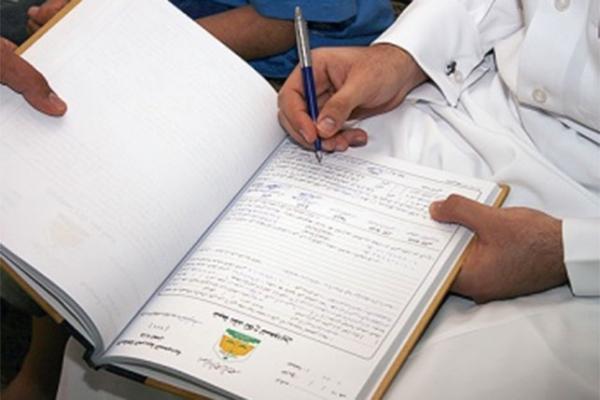
Under this system, specific licensed marriage officers are granted official contract books that allow them to record marriage contracts for expatriates outside court premises, subject to defined legal conditions. This initiative also aligns with the growing demand for simplified services similar to online nikah in Saudi Arabia, although the official legal process still requires authorized documentation.
Previously, applications for marriage contracts for expatriates were submitted either through physical court forms or via electronic systems to schedule a court appointment. Now, applications can be submitted directly to the authorized marriage officer, making the nikah procedure in Saudi Arabia easier and faster for expatriates.
Applicants must possess a valid Iqama (residency permit). The presence of the bride’s guardian is mandatory, and in cases where the bride is divorced, a valid divorce certificate must be provided as part of the legal marriage in Saudi Arabia requirements.
Couples unfamiliar with legal Nikah procedures may also review the court marriage procedure followed under Pakistani law for comparison, as many expatriates researching marriage in Saudi Arabia for foreigners often compare international marriage regulations.
Service Fee for Marriage Officers
No fixed fee is prescribed for marriage officers for this service, and any payment remains optional according to local practice.
It is important to note that Saudi courts issue marriage contracts for mixed-nationality marriages only when one spouse is a Saudi citizen and the other is not, subject to obtaining an official marriage permit to ensure all legal conditions are met under the official nikah procedure in Saudi Arabia.