

Pakistani divorce law is governed by the Muslim Family Laws Ordinance 1961 (MFLO), the Dissolution of Muslim Marriages Act 1939, and the Family Courts Act 1964. Five paths exist for dissolving a Muslim marriage in Pakistan: Talaq (initiated by the husband), Khula (initiated by the wife through the Family Court), Mubarat (mutual divorce), Talaq-e-Tafweez (delegated Talaq exercised by the wife under an authority granted in the Nikah Nama), and Judicial Divorce under the Dissolution of Muslim Marriages Act 1939 on specific grounds. All paths involve a mandatory 90-day reconciliation period at the Union Council under Section 7 MFLO before the divorce becomes legally effective. Rights to Mahr, maintenance, and children's custody depend on the specific path and the circumstances of each case.
Divorce is a sensitive topic, especially in Pakistan, where societal norms and legal complexities can make the process challenging. Whether you are in Pakistan or living abroad in countries like the UK, UAE, USA, Canada, or Saudi Arabia, understanding the divorce procedure in Pakistan is essential. This guide explains the process, laws, and rights associated with divorce and Khula in Pakistan, ensuring clarity and legal accuracy.
Divorce Procedure in Pakistan
Divorce in Pakistan is governed by Muslim Family Law Ordinance, 1961, which outlines specific steps for a man (Talaq) and a woman (Khula).
Divorce Procedure in Pakistan — For Men: Talaq
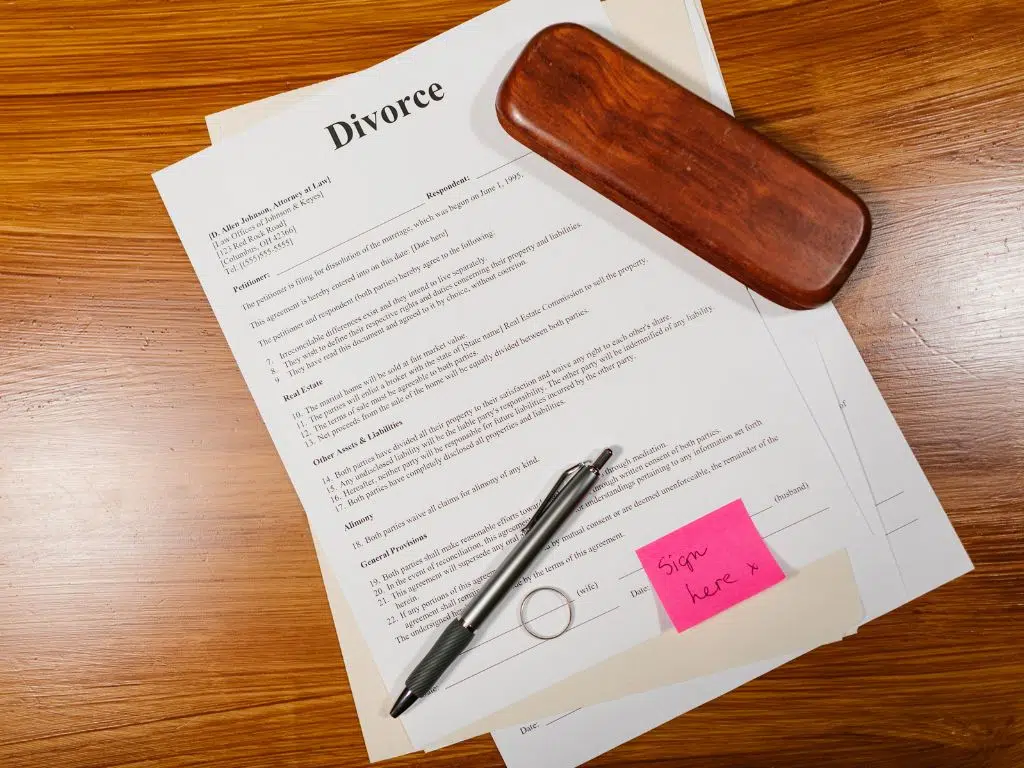
Declaration of Talaq:
The husband must pronounce Talaq verbally or in writing.
Sending Divorce Notice:
A written notice must be sent to the wife and the Chairman of the Arbitration Council on a proper stamp paper for divorce in Pakistan.
Arbitration Council:
The council attempts reconciliation within 90 days. If reconciliation fails, the divorce is finalized.
Issuance of Certificate:
The Arbitration Council issues a divorce certificate, confirming the legal dissolution. The operational workflow, notice preparation, filing, Arbitration Council hearings, and certificate issuance, is covered in detail in our step-by-step divorce process at the Union Council guide.
Divorce Procedure in Pakistan — For Women: Khula

Filing a Petition:
The wife files a petition for Khula in the Family Court, citing valid reasons (e.g., cruelty, non-support).
Court Proceedings:
The court reviews the case, including evidence and statements from both parties.
Return of Mahr:
The court may order the wife to return part or all of her Mahr (dowry) as part of the Khula process.
Decree of Khula:
If reconciliation efforts fail, the court issues a Khula decree, finalizing the divorce.
Divorce Law and Procedure in Pakistan
Pakistan's divorce laws ensure fairness and address both parties' rights:
- Talaq Laws: Governed by the Muslim Family Laws Ordinance 1961, Talaq is pronounced by the husband and then sent in writing to the Chairman of the Union Council and to the wife. The Union Council constitutes an Arbitration Council to attempt reconciliation; if reconciliation fails, the Talaq becomes effective after the 90-day iddat period and the Union Council issues the divorce effectiveness certificate.
- Khula Laws: Governed by the West Pakistan Family Courts Act 1964 and the Dissolution of Muslim Marriages Act 1939, Khula allows a wife to seek dissolution of marriage without the husband's consent by filing a petition in the Family Court. The court attempts reconciliation and, where unsuccessful, grants Khula typically on return of the dower, after which the Union Council issues the registration.
- Mutual Divorce Deed in Pakistan: a written agreement signed by both husband and wife on stamp paper, recording their consent to end the marriage and settling terms such as dower, mehr, maintenance, custody of children and return of personal belongings. Executed before witnesses, it is submitted to the Union Council to begin the 90-day Talaq-e-Mubarat registration process.
Divorce Procedure in Pakistan: Rights of Wife After Divorce
Under Pakistani law, a wife retains certain rights post-divorce, including:
- Maintenance for Iddat Period: Financial support during the three-month Iddat period.
- Custody of Children: Mothers are often granted custody, considering the child’s welfare.
- Mahr and Dowry: The wife can retain her Mahr unless ordered to return it in Khula cases.
- Property Rights: Women may claim property or assets agreed upon during marriage.
Divorce Procedure in Pakistan: How to Send the Divorce Notice
The husband must follow these steps to ensure the process is legally valid:
- Draft the divorce notice on stamp paper for divorce Pakistan.
- Send the notice via registered mail to the wife and the Chairman of the Arbitration Council.
- Await the council's process to issue a divorce certificate.
Failure to follow these steps can lead to legal complications, including fines or imprisonment.

FAQs About the Divorce Procedure in Pakistan
1. What is the legal procedure for divorce in Pakistan?
Divorce involves sending a written notice to the wife and the Arbitration Council, followed by a 90-day reconciliation period.
2. What is Khula in Pakistan?
Khula is a woman’s right to seek divorce by filing a petition in the Family Court.
3. What is the cost of stamp paper for divorce in Pakistan?
The cost varies by region but typically ranges between PKR 100 to PKR 500.
4. Can a wife claim maintenance after divorce?
Yes, she is entitled to maintenance during the Iddat period and may claim child support if applicable.
5. How to get a divorce deed in Pakistan?
The Arbitration Council issues a divorce deed once all legal formalities are completed.
6. Is Khula faster than Talaq in Pakistan?
Khula may take longer as it involves court proceedings, while Talaq follows a streamlined process.
7. Are divorce laws in Pakistan the same for overseas Pakistanis?
Yes, but they must follow local legal requirements, including documentation attested by the Pakistani embassy.
8. What happens if a husband does not send a divorce notice?
The divorce may be considered invalid, and legal penalties can apply.
9. Can I access divorce law in Pakistan in Urdu?
Yes, resources like PDFs and legal documents in Urdu are available for better understanding.
10. Can property disputes be settled during divorce?
Yes, property disputes can be resolved during divorce or through separate civil proceedings.
Conclusion
The divorce procedure in Pakistan ensures justice and fairness, whether through Talaq or Khula. By following the legal requirements, both parties can protect their rights. For detailed guidance, consult legal experts or family law specialists in Pakistan.
- #Divorce Procedure
- #Talaq
- #Khula
- #Union Council
- #Pakistan
Need help with this?
Get a free consultation with an experienced family lawyer. We serve clients in Pakistan and overseas.