
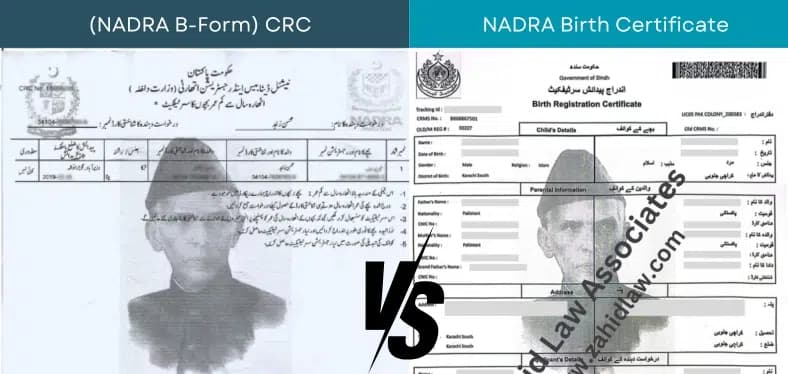
The Child Registration Certificate (CRC) is issued at the local Union Council when a birth is first registered, it is the underlying registration record. The NADRA Birth Certificate is the computerized bilingual (Urdu and English) certificate issued by NADRA from that CRC record, it is the document accepted by government departments, schools, universities, embassies, and foreign authorities as formal proof of birth. The B-Form (Child Registration Certificate held by NADRA) is a related document issued to minors before they obtain a CNIC at age 18. For most legal, educational, and international purposes in Pakistan today, the NADRA Birth Certificate is required, not the original CRC.
In Pakistan, identity documentation serves as a cornerstone for accessing essential services, protecting personal rights, and engaging fully in civic life. Among these critical documents are the (NADRA B-Form) Child Registration Certificate (CRC) and the NADRA Birth Certificate, each with unique purposes. These documents, issued by the National Database and Registration Authority (NADRA), help citizens of all ages establish their identity, access resources, and navigate the legal landscape with ease.
What is a CRC?
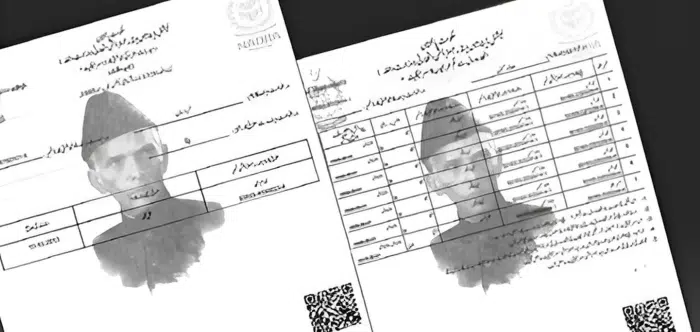
The Child Registration Certificate, commonly referred to as the CRC, is an official document issued by NADRA to record a child's identity at birth. It is more than a simple record; it serves as the first official recognition of a child in Pakistan's population registry. Eligible for all minors under the age of 18, a CRC provides proof of citizenship, which can be essential for schooling, healthcare, and other government services. Parents or legal guardians must initiate the CRC application, often within the first month following a child’s birth.
What is a NADRA Birth Certificate?
A NADRA Birth Certificate is a more comprehensive document that certifies an individual's birth details, such as the name, date, place, and parentage, based on NADRA's authenticated records. Introduced to standardize birth documentation in Pakistan, the NADRA Birth Certificate has replaced traditional certificates and is widely accepted for both domestic and international purposes. Unlike the CRC, it applies to people of all ages and serves as official proof of birth for purposes ranging from school admission to obtaining a passport.
Key Differences Between a CRC and a NADRA Birth Certificate
While both the CRC and NADRA Birth Certificate establish a person's identity, they differ significantly in purpose, scope, and application. The CRC primarily identifies minors, providing necessary data for population management and healthcare systems. In contrast, the NADRA Birth Certificate is a lifelong document, used for legal, educational, and official purposes, often required at every stage of a person's life. Additionally, the NADRA Birth Certificate can serve as a foundational document when applying for other forms of identification, such as a passport or CNIC.
Purpose of the CRC
The CRC acts as the legal representation of a child’s existence and identity within the Pakistani system. It is essential for all minors, as it establishes their citizenship and facilitates access to services like school enrollment and government healthcare. For children, the CRC is a primary document that ensures they are recognized by the state from birth, safeguarding their rights until they transition to an adult ID upon reaching legal age.
Purpose of a NADRA Birth Certificate
While the CRC is generally only relevant until adulthood, the NADRA Birth Certificate is used throughout a person’s life. This document is crucial for official transactions and identity verification, as it provides a complete record of an individual's birth information, ensuring they can access legal and social services seamlessly. From applying for passports and visas to enrolling in educational institutions and fulfilling employment requirements, the NADRA Birth Certificate is indispensable for those needing a lifetime identity document.
When and Why You Need a CRC
A CRC is needed primarily during early childhood to ensure that a child is registered in the national database. This document is crucial for receiving vaccination programs, registering for school, and receiving social services geared towards children. By ensuring that every child has a CRC, parents help pave the way for their child’s future opportunities within Pakistan's public and private sectors.
When and Why You Need a NADRA Birth Certificate
The NADRA Birth Certificate becomes critical at various stages in life where full legal identity verification is required. It is mandatory for many government applications, including passport and CNIC issuance, as well as for private transactions, such as bank account openings. Additionally, when traveling abroad, individuals need a valid birth certificate to fulfill international identification requirements. For anyone over 18, the NADRA Birth Certificate is the official document affirming their birth and nationality.
Application Process for Both Documents
Applying for a CRC involves the child’s guardian submitting an application to NADRA, supported by the guardian's CNIC and proof of the child's birth from a hospital or municipality. Once all documents are verified, NADRA issues the CRC, allowing the child to be included in national records.
The application process for a NADRA Birth Certificate is similar but requires additional documentation, including a copy of the CRC for minors or a CNIC for adults. After verification, the NADRA Birth Certificate is issued, ready for use in official capacities. Processing times and fees vary depending on whether it is requested for urgent or regular issuance.
Common Misconceptions and Clarifications
A prevalent misconception is that the CRC and NADRA Birth Certificate are interchangeable. However, these documents serve different purposes, and each is needed at specific life stages. Another misconception is that both documents are required for all official processes; in reality, the NADRA Birth Certificate is the go-to document once an individual reaches adulthood, while the CRC is relevant only for minors. Understanding these distinctions helps avoid delays and ensures efficient access to services.
How Zahid Law Associates Assists in Obtaining Your NADRA Birth Certificate
Navigating the process of obtaining a NADRA Birth Certificate can be complex, but Zahid Law Associates simplifies it by offering assistance and guidance. With years of experience in legal documentation services, Zahid Law Associates helps you fulfill all requirements efficiently, ensuring that you or your loved ones receive a valid and timely NADRA Birth Certificate to access essential services and secure your legal rights in Pakistan.
Frequently Asked Questions
Is the CRC the same as the NADRA Birth Certificate?
No. The CRC (Child Registration Certificate) is the initial registration record kept at the Union Council when the birth is first reported. The NADRA Birth Certificate is the computerized bilingual document issued by NADRA from that record. The NADRA Birth Certificate is what is accepted today by government departments, schools, universities, embassies, and foreign authorities.
Which document do I need for a passport application?
The Passport Office requires the NADRA Birth Certificate, not the original CRC. If you only have the CRC, you must first obtain the NADRA Birth Certificate before applying for the passport.
What is the B-Form and how does it relate?
The B-Form is the Child Registration Certificate issued by NADRA to minors under 18 years of age. It contains the child's registration details and is used for school admissions, medical records, and travel documents until the child obtains a CNIC at age 18. The B-Form is issued from the same underlying birth registration record as the NADRA Birth Certificate.
Can I use the CRC for foreign country requirements?
No. Foreign embassies, immigration authorities, and educational institutions require the computerized NADRA Birth Certificate, typically attested by MOFA Pakistan and the destination country's embassy. The original CRC is not accepted for international purposes.
How do I obtain a NADRA Birth Certificate if I only have the CRC?
Apply at the Union Council that issued the original CRC or at a NADRA Registration Centre with the CRC, both parents' CNICs, and any supporting documents. NADRA verifies the underlying registration and issues the computerized certificate. Typical timeline: 7 to 15 working days. For overseas Pakistanis, the process can be handled through a legal representative in Pakistan via Power of Attorney.
What if the child's birth was never registered?
Late birth registration is permitted under Pakistani law. The parents apply at the local Union Council with proof of the birth (hospital records if available), both parents' CNICs, and any witnesses to the birth. Once registered, the CRC is issued, followed by the NADRA Birth Certificate. Late registration for older children requires additional documentation and legal declarations.

Need help with this?
Get a free consultation with an experienced family lawyer. We serve clients in Pakistan and overseas.