
Dishonour Cheques | Cheque Dishonour
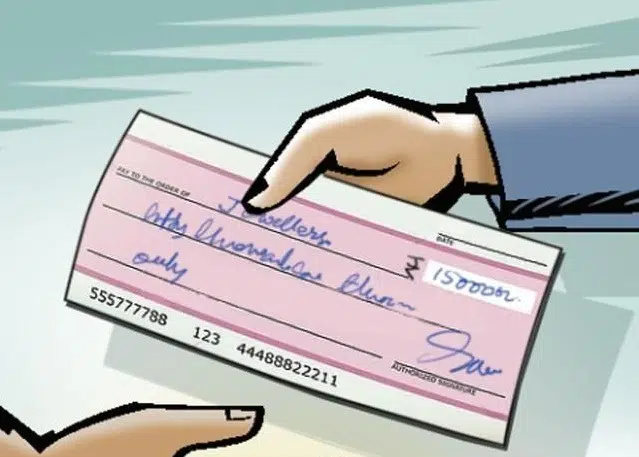
INTRODUCTION
Such person cheque dishonour shall be deemed to have committed an offense and shall be punishable with imprisonment for a term, which may extend to two years, or with a fine, which may extend to twice the amount of the cheque or with both. Under the cheque bounce law in Pakistan, issuing a dishonoured cheque for repayment of liability may lead to criminal prosecution.
WHAT CONSTITUTES AN OFFENCE
- Such a cheque should have been presented to the bank within a period of six months of the date on which it was drawn or within the period of its validity, whichever is earlier; this period is commonly referred to as the cheque validity period in Pakistan or cheque bounce validity period in Pakistan.
- The payee or holder in due course of such cheque should have made a demand for the payment of the said amount of money by giving a notice, in writing, to the drawer of the cheque within thirty days of the receipt of the information by him from the bank regarding the return of the cheque unpaid; and
- The drawer of such cheque should have failed to make the payment of the said amount of money to the payee or the holder in due course of the cheque dishonour within fifteen days of receipt of the said notice.
- The cheque in question should have been issued in discharge of the whole or part of a debt or liability; otherwise, the maker of the cheque is not liable for prosecution. For example, if the cheque is given as a gift or present and if the bank dishonours it the maker of the cheque is not liable for prosecution.
- Many people also ask what is the minimum amount for cheque bounce case in Pakistan is. Generally, there is no specific minimum amount prescribed in law for initiating a cheque dishonour case in Pakistan if the cheque was issued against a lawful liability.
OFFENCES BY COMPANIES
- If the person committing the offense is a company, every person who, at the time the offense was committed, was in charge of and responsible to the company for the conduct of the business of the company shall be deemed to be guilty of the offense and shall be liable to be proceeded against and punished.
- If a person proves that the offense was committed without his knowledge or that he had exercised due diligence to prevent the commission of such offense, he shall not be punishable.
- Where a person is nominated as a director of a company by virtue of his holding any office or employment in the Central Government or State Government or a financial corporation owned or controlled by the Central Government or State Government, he shall not be liable for prosecution.
- Where any offense has been committed by a company, and if it is proved that the offense has been committed with the consent or connivance of, or is attributable to, any neglect on the part of any director, manager, secretary, or other officer of the company, such person shall also be deemed to be guilty of that offense and shall be liable to be proceeded against and punished accordingly.
PRESENTATION OF CHEQUE ANY NUMBER OF TIMES
- There is no embargo upon the payee to successively present a dishonoured cheque during the period of its validity.
- There is no restriction regarding the number of times a cheque can be presented, and every subsequent representation and dishonour gives rise to a fresh cause of action for filing a complaint.
- In the course of business transactions it is not uncommon for a cheque being returned due to insufficient funds or a similar such reason and to be presented again by the payee after some time, on his own volition or at the request of the drawer, in expectation that it would be cashed.
- For dishonour of one cheque there can be only one offense, and such offense is committed by the drawer immediately on his failure to make the payment within 15 days of the receipt of the notice served.
- On each presentation of the cheque and its dishonour, a fresh right and not cause of action accrues. Therefore, the payee, without taking preemptory action in exercise of his right, may go on presenting the cheque so as to enable him to exercise such right at any point of time during the validity of the cheque.
- A cause of action would arise only on failure to pay after notice.
- Once a notice for payment is given, a fresh cause of action will not arise if the cheque is presented again and it is dishonoured.
EFFECT OF STOP PAYMENT
- Stop payment instructions cannot obviate the offense.
- Even if stop payment instructions are given and notice of the same is given to the payee or holder in due course, liability cannot be avoided.
- The position will not be different even if the drawer had instructed the bank to stop payment prior to the presentation of the cheque for encashment.
- Once the cheque is issued, there is a presumption that the holder received the cheque for the discharge of any debt or liability, and merely because the drawer issues a notice to the drawee or to the bank for stoppage of the payment, it will not preclude an action under the Act.
NOTICE IN CASE OF DISHONOUR Cheque
- The requirement of giving notice is mandatory in every cheque dishonour case in Pakistan. If no notice making a demand for payment is served upon the drawer within 30 days from the date of dishonour of cheque, a complaint is not maintainable unless the complainant satisfies the court that he had sufficient cause for not making a complaint within such period.
- “Notice” means a notice in writing.
- A postal acknowledgement due containing the signature of the accused is proper proof of service of the notice on the addressee shown in the postal acknowledgement.
- When a notice is returned by the sender as unclaimed, such date would be the commencing date in reckoning the period of 15 days. Such reckoning would be without prejudice to the right of the drawer of the cheque to show that he had no knowledge that the notice was brought to his address.
- The notice need not necessarily be by registered post only. It can be sent by a telegram, fax, or letter as well.
For general understanding, many people search for the dishonoured cheque meaning in Urdu, which refers to a cheque returned unpaid by the bank due to insufficient funds or other banking reasons.
However, it is preferable to send the notice by registered post, as that is clear evidence of service.
PERIOD OF PAYMENT
- If payment is not made within 15 days of the receipt of the notice, then the offense shall be deemed to have been committed.
- The cause of action for filing a complaint would arise after the completion of 15 days from the date the drawer receives the notice and fails to pay the amount within that period.
- The court cannot take cognizance prior to the lapse of the period of 15 days even if there was a denial of the liability earlier. Even after denying liability to pay the amount, the accused can at any time change his mind within 15 days of receipt of notice, make payment, and avoid prosecution.
- The offense shall be deemed to be committed only from the date when the notice period expired.
The drawer cannot take the excuse that he had no reason to believe when he issued the cheque that the cheque may be dishonoured on presentation for the reasons stated above.
REMEDIES
- To file a civil suit
- To file a complaint under section 138 of the Negotiable Instruments Act, 1881
- To file complaint under section 420 for cheating under the Pakistan Penal Code
In case a person has filed suits for recovery, he is not precluded from filing a complaint under section 138 of the Negotiable Instruments Act and section 420 of the Pakistan Penal Code. Both remedies may be simultaneously possible. A civil suit cannot debar the criminal prosecution in a cheque dishonour case in Pakistan.
FILING OF A COMPLAINT
The court will not take cognizance of any offence unless
- The payee or holder in due course of the cheque makes a complaint in writing.
- The payee cannot lodge a complaint after the completion of one month from the date on which the cause of action arose.
- A complaint can be filed through Power of Attorney, agents of the payee or holder in due course
- A complaint has to be filed in writing along with the list of witnesses and the list of documents.
WHERE TO FILE THE COMPLAINT
A complaint can be filed in a court within the jurisdiction of which—
- The cheque has been drawn
- The place where the cheque is presented for collection
- The place where it is received after endorsement
- The place where cheque is dishonoured.
The offense shall not be triable by any court inferior to that of a Metropolitan Magistrate or Judicial Magistrate of the first class.
LIMITATION
A complaint has to be filed within one month of the date on which the cause of action arises, i.e., within 45 days of the offender receiving the notice to make payment. This limitation period is important for initiating proceedings under the cheque bounce law in Pakistan.
PROCEDURE ON RECEIPT OF THE COMPLAINT
- If the magistrate is of the opinion that there are sufficient grounds for proceeding, he shall call the complainant for pre-summoning evidence, and the necessary documents shall be exhibited.
- Thereafter summons are issued for the attendance of the accused and the witnesses.
- The evidence of the witnesses is recorded.
- The particulars of the offense are stated to the accused, and he shall be asked whether he pleads guilty or has any defense to make.
- If he accused pleads guilty, the magistrate shall record the plea and convict him.
- If the accused does not plead guilty, the magistrate shall proceed to hear the complainant and the accused and take all the evidence as may be produced by both.
- On the hearing and evidence, the magistrate shall pass the order of conviction or acquittal.